
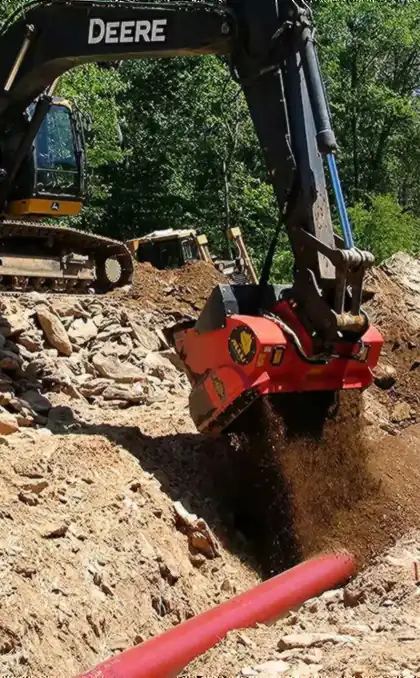
Stop paying to dump it.Turn it into product you sell.
Vulkan Prime sizes ALLU buckets for soil, compost and manure yards, asphalt tear-out crews, land clearing crews and flatwork and light demolition contractors in South Florida. Screen topsoil and compost into a finished product. Crush concrete, asphalt and caprock into base you reuse instead of hauling it off.
Vulkan Prime at a glance
Vulkan Prime is a Miami, Florida company that sells and sizes ALLU screening buckets and crusher buckets. It is run by founder Gustavo Lopez and operated by EXL Business Consulting LLC. We help crews screen soil, compost and manure into sellable product and crush concrete, asphalt and rock on site to cut haul-off and dump costs. We cover Miami-Dade, Broward and Palm Beach counties and the rest of Florida. Call or text (786) 946-9696 or email gustavo.l@vulkanprime.com.
Who it is for
Four kinds of crews already pay to move, dump or buy the material a bucket can process. If you are one of them, the savings are easy to see.
Soil, compost and manure yards
Screening is your product. A screening bucket on the loader you already own becomes a second screener: topsoil, mulch, compost and horse or chicken manure come out clean, sized and ready to sell, without waiting on the trommel.
Asphalt tear-out crews
Milled and broken asphalt is a dump bill or a product. A crusher bucket sizes chunks on site into millings you can reuse as base for driveways, parking lots and yard roads, or sell to the next job.
Land clearing and lot pads
Roots, stumps and caprock come out of the fill instead of leaving on trucks. Screen the spoil, crush the caprock and build the pad with material that was already on the lot, from Redland to Loxahatchee and the Acreage.
Flatwork and light demolition
Driveways, slabs, sidewalks, curbs and small buildings. Big crushing crews skip jobs under a few hundred tons, so most of this concrete goes to the dump at $76 to $126 a ton. Crush it where it comes out and reuse it as base.

The fines become product. What comes over the top gets crushed or set aside.
Every ton you dump is a bill. Every ton you keep is product.
South Florida dump fees are among the highest in the state, and the trucking comes on top. Here is what the public price lists say.
About $100 a ton
County rate for construction and demolition debris, concrete included, starting January 2026.
$76 to $116 a ton
County disposal rate with and without a contract, plus transfer fees. Private transfer stations list about $126 a ton.
Dump bill becomes base
Crushed concrete and asphalt become base you would otherwise buy. Screened soil and compost become product you sell. Fewer trucks leave, fewer trucks come back.
Big crushing crews skip jobs under a few hundred tons. That is exactly where a bucket pays.Why this works for small and mid-size crews
The plant is the machine you already own
No plant, no yard setup, no second crew. The bucket goes on the excavator, loader or skid steer already on your job. ALLU makes screening buckets from skid steer size up to 120-ton carriers, jaw crusher buckets, and dedicated asphalt and concrete buckets. We size it to your machine and your material, and we tell you plainly when it does not pay.
Screens, sizes and blends in one pass. Turns raw piles into finished topsoil, compost and mulch, pulls roots, rock and bones out of fill and manure, and leaves only clean, sized material behind.
| Series | DC · DL · D · M |
| Carrier class | 2 to 120 t · sized to yours |
| Product size | set by screen |
| Best for | yards, land clearing |
Crushes slab, driveway, sidewalk and curb tear-out, broken asphalt and caprock into a sized, angular product right where it comes out of the ground. Reuse it as base on the same job or sell it, instead of trucking it to the dump.
| Type | jaw crusher bucket |
| Carrier class | 4 to 38 t · sized to yours |
| Jaw setting | adjustable |
| Best for | tear-out, demolition |
Each one stands alone. The screening bucket earns its keep on soil, compost, manure and land clearing spoil. The crusher bucket earns its keep on concrete, asphalt and rock. They work better together: crush first, then screen the crushed material to a clean, consistent size. One machine and one operator can run both.
We run your numbers before we recommend a bucket
What you move, dump or buy today
Loads a month, dump fees, trucking, and what you buy back as base, fill or topsoil. That is the cost a bucket can cut.
Sized to the carrier you already run
Weight class, hydraulic flow and coupler. The wrong size wastes money, so we match the bucket to the machine, not the other way around.
Payback in months, or a clear no
If your volume does not justify a bucket, we say so and there is no second call. If it does, you see the math before you spend a dollar.
Delivery, setup and support
We get the bucket on your machine and your operator running it, in English, Spanish or Portuguese.
Not experimental. ALLU buckets work worldwide.

Product made from the pile already on site
The machine that dug or pushed the pile screens it in place. What falls through is clean product. What comes over the top is oversize the crusher bucket takes, or roots and debris set aside. No second machine, no import truck, no haul-off.
ALLU customer stories →
Material that used to leave on a truck, back to work on the same site.
Questions buyers ask
What does Vulkan Prime sell?
Vulkan Prime sells and sizes ALLU screening buckets and ALLU crusher buckets in South Florida. They mount on the excavator, loader or skid steer you already own, so you can screen soil, compost and manure or crush concrete, asphalt and rock right where the material sits.
Who buys a screening or crusher bucket?
Four kinds of crews get the fastest payback: soil, compost and manure yards that screen every day; asphalt tear-out crews; land clearing and lot-pad crews in rocky ground; and flatwork and light demolition contractors who haul broken concrete to the dump.
How much can a crusher bucket save on dump fees?
It depends on your tonnage. Broward County charges about $100 a ton for construction and demolition debris, and Miami-Dade about $76 to $116 a ton, before trucking. Concrete you crush on site stops being a dump bill and becomes base material you would otherwise buy. We run the numbers on your own jobs before recommending anything.
Do I need a new machine?
No. The bucket is sized to the carrier you already run, from skid steers and compact loaders up to large excavators. No plant, no yard setup and no extra operator.
Can a screening bucket make sellable topsoil or compost?
Yes. Screening is how soil, mulch, compost and manure yards turn raw piles into a finished product. A screening bucket separates fines from rocks, roots, sticks and bones in one pass, and it can blend amendments at the same time.
What areas do you cover?
Miami-Dade, Broward and Palm Beach counties first, then the rest of Florida. We meet you on the job or at your yard. We speak English, Spanish and Portuguese.
How do I get a recommendation?
Call or text (786) 946-9696, or email gustavo.l@vulkanprime.com with your machine, the material you handle and roughly how many tons or loads a month. You get a straight answer, including when a bucket does not make sense for you.
Who you work with

I work in material processing in South Florida. I look at what you move, what you pay to dump it, and what you buy back, and then at whether a bucket on your own machine changes that math.
The economics come before the equipment. You work with me directly, on your site or at your yard.
Tell us what you move
Send your machine, the material you handle and roughly how many loads or tons a month. You get a straight recommendation, including when a bucket does not make sense.
- Your machine. Make, model and weight class.
- Your material. Topsoil, compost, manure, concrete, asphalt, caprock or land clearing spoil.
- Your volume. Loads or tons a month, and what you pay to dump or buy.
- No obligation. No equipment pitch until the numbers earn it.
Texting us is optional. Message and data rates may apply. Reply STOP to opt out. See our Text Messaging Terms.